America Is Closed For Repairs

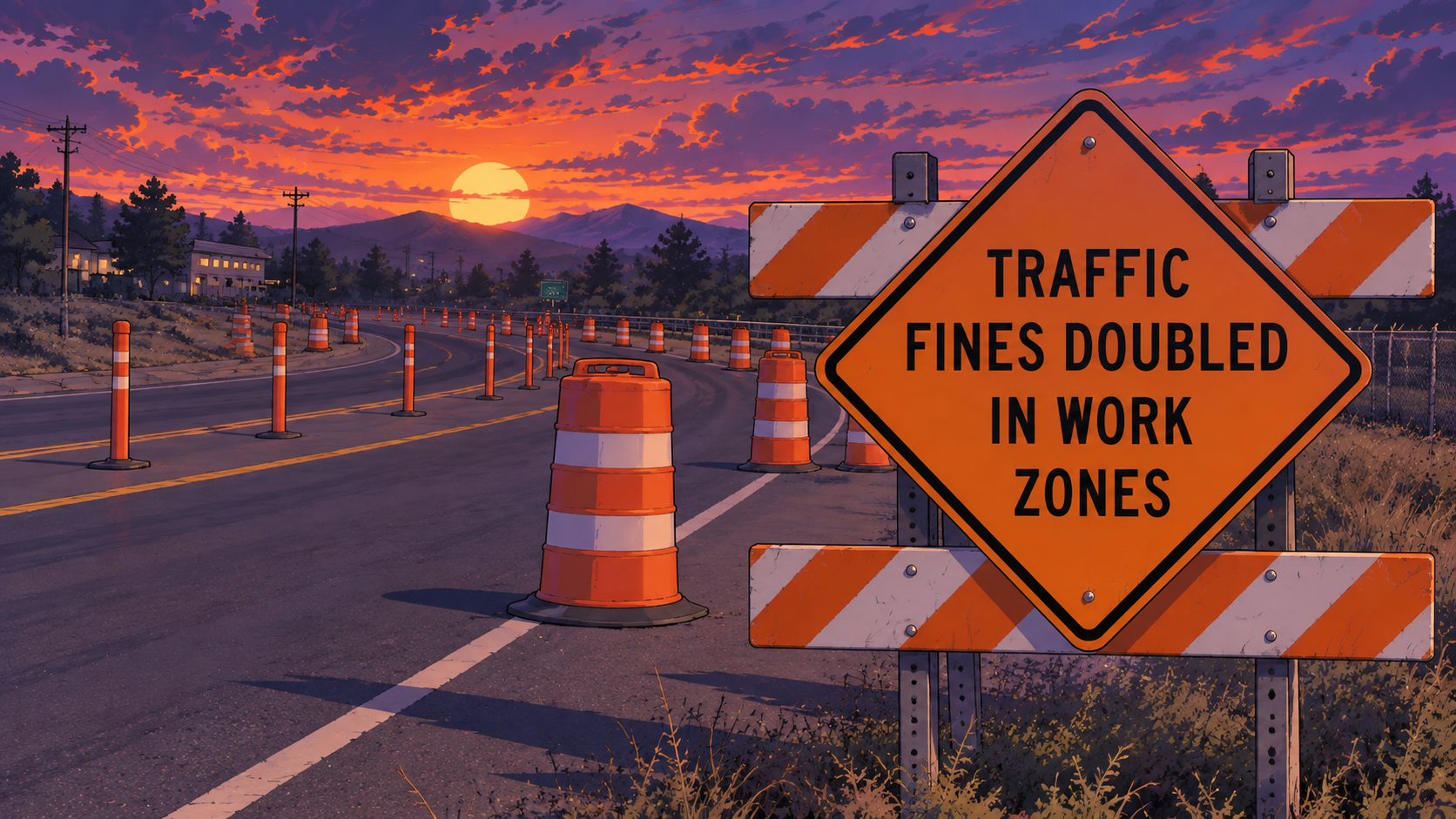
Ten hours there. Ten hours back. Approximately six functioning miles of highway. I would like to formally report that every road in the United States is currently being worked on. I don’t know who authorized this.
Ten Hours Each Way
We took a road trip, which sounds recreational when you say it like that. Technically, I guess it was. We voluntarily got into a car with luggage, snacks, a playlist nobody was allowed to criticize for the first two hours, and the general understanding that we were going somewhere far enough away to justify all of this. The drive was supposed to be ten hours there and another ten hours back. Twenty hours total. That sounded manageable when it existed as math. Ten plus ten. Very clean. Very reasonable. What the estimate did not account for was that approximately every five miles, the interstate turned orange. Cones, barrels, signs, more signs, and signs warning us about the signs we were about to see. ROAD WORK AHEAD. Yes. I know. There has been road work ahead for six hours.
Impeccable Timing
The part that impressed me most was the scheduling. Not theirs. Ours. Somehow, without trying, we managed to travel during the exact hours when construction was happening on whichever road we happened to be using. If we were driving in the middle of the day, we found daytime work: lane closures, flaggers, dump trucks, and three people standing around something important-looking. Then later, when we happened to be driving at night, we found night work. Different highway, different state, different crew. NIGHT WORK AHEAD. Of course. Portable floodlights. Fresh cones. One lane closed. Everybody in reflective clothing. It wasn’t that every construction crew in America was working twenty-four hours a day. That would actually make more sense. We just somehow arranged our travel schedule so that whenever we reached a particular stretch of highway, that was also when they had decided to work on it. If the road work was scheduled from 9 a.m. to 3 p.m., apparently we were coming through at 12:40. If another project started at 8 p.m., apparently that was the one we reached at 8:17. I don’t know what the odds are. I only know we kept winning. There had to be thousands of miles of perfectly clear highway while those crews were off the clock. We simply never saw any of it.
Merge Left
There is a very specific emotional progression that happens when you see a construction sign on a long drive. The first one doesn’t bother you. You think, That’s fine. Then the lanes narrow, everyone merges, traffic slows down for maybe ten minutes, and eventually the road opens back up. Normal. Five miles later, there’s RIGHT LANE CLOSED 2 MILES. Okay. Fine. We do it again. Then ONE LANE ROAD AHEAD. Then EXPECT DELAYS. Then DETOUR. At some point I stopped reacting. Orange sign. Sure. Of course. Why wouldn’t there be? Apparently we had accidentally planned the trip using the Department of Transportation’s shift calendar.
The Empty Lane
There was also one stretch where an entire lane was closed for miles. Not a little taper. Not a crew working around a bridge. Not one excavator doing something complicated enough that I could at least pretend to understand why we were all driving twenty miles per hour. Just cones. Miles of cones. The lane disappeared, traffic compressed into one side, and we kept waiting to eventually reach the reason for it. A truck. A crew. Fresh pavement. Somebody with a clipboard. Anything. Nothing. We drove through the whole thing and never found a single person working. No equipment. No hole. No visible problem. Just one perfectly usable lane sitting there behind a wall of orange barrels like it had been put in time-out. Maybe they were on break. Maybe the work had already happened. Maybe the work was going to happen tomorrow and they wanted to get the inconvenience out of the way early. I don’t know. What I do know is that for several miles, hundreds of us were politely not using half the road because somebody had asked us not to. And apparently that was enough.
The Detour
The GPS developed a personality during this trip, and not a good one. Every time traffic slowed down, it would suddenly suggest an alternate route. SAVE 7 MINUTES. This sounds good. You take the exit. Then immediately: Route updated. 34 minutes added. What happened to the seven minutes? Where did they go? Did we spend them? Did somebody else need them? Now we’re on a two-lane road through somewhere we have never heard of, following a tractor at thirty-eight miles per hour. Then the GPS announces that it has found a faster route. Excellent. 58 minutes longer. That is not faster. That is the opposite of faster. That is an entirely different category of time. At one point we were given the option to avoid a construction delay by taking an alternate route that added almost an hour to the trip. I stared at the screen for a while. The road we were already on had construction. The alternate road had construction. The alternate route around the alternate road also had construction. Presumably there was a fourth road somewhere that was completely empty, freshly paved, and untouched by human hands. We were not invited to use it.
Five Miles
Am I exaggerating when I say there was road work every five miles? Probably. I didn’t actually measure it. But there was enough of it that the pattern became predictable: construction, clear road, five minutes of hope, construction. Sometimes we would get twenty or thirty peaceful miles and start believing we had finally escaped it. Then we would cross into another county and there it was again: ROAD WORK NEXT 8 MILES. There you are. I respect infrastructure. I like bridges staying where bridges are supposed to be. I appreciate roads without holes in them. I understand that maintaining thousands of miles of highway requires occasionally inconveniencing the people using those highways. I just did not realize we were personally going to attend every scheduled maintenance window between home and our destination. That felt excessive.
Ten Hours Back
The worst part about a ten-hour drive somewhere is knowing that eventually you have to do it again in reverse. There is no mystery left. Except, apparently, construction schedules. Because the return trip managed to do the same thing. If we came through somewhere in daylight, the daytime crews were out. If we reached another stretch after dark, congratulations, that was where the overnight closure started. We were never early. We were never late. We were apparently punctual. There were probably people who drove the exact same roads two hours before us and saw nothing. Open lanes. No delays. No fluorescent orange anything. Meanwhile, we arrived precisely when somebody was unloading cones from a truck. It began to feel less like bad luck and more like we should have been issued hard hats.
Road Trip Math
Ten hours of driving creates its own system of mathematics. Two hours remaining feels reasonable. One hour and twenty minutes feels longer than two hours. Forty-five minutes is basically nothing. Thirty minutes takes four hours. The last twelve miles exist outside conventional time. Then, just when you’ve completed ten hours of this and finally gotten out of the car, there is a small part of your brain quietly reminding you that you have to drive home. Every construction zone also adds a completely fictional number to your arrival time. Delay: 8 minutes. Wrong. We have been beside this concrete barrier since childhood. I have developed memories here. That excavator is family now.
Things You Learn
You learn things about someone when you spend ten hours in a car with them, and then you learn whether those things still seem charming after another ten. You learn how long they can tolerate the same playlist. You learn whether they consider “we should probably get gas soon” to mean within the next fifty miles or the light has been on for seventeen minutes. You learn that there is always one person who says, “Traffic looks like it’s opening up,” immediately before traffic completely stops. You learn that nobody actually agrees on the correct temperature for the inside of a car. You also learn that eventually you stop needing to fill the silence. For a while we talked about everything. Then we talked about nothing. Then we got tired enough that somebody pointed at a cow and said, “Cow,” and that qualified as conversation. There was something nice about that. Not the cow specifically, although it seemed fine. Just being somewhere between where we started and where we were going, without anything particularly important to do except keep moving, even if “moving” occasionally meant sitting completely still beside a sign that said FINES DOUBLED IN WORK ZONES.
We Made It
Eventually we got home. The car was full of empty coffee cups, receipts, snack wrappers, charging cables, and whatever mysterious collection of objects accumulates in the passenger footwell during twenty total hours on the road. My back hurt. Everyone was tired. We had spent ten hours driving there, ten hours driving back, and somehow hit road work during every portion of the day when road work was apparently scheduled to exist. And I’d do it again. Which is irritating. Because somewhere underneath the traffic and the detours and the gas station coffee and the GPS repeatedly trying to send us into the wilderness, I actually liked it. There is something comforting about going somewhere the slow way. You see more. You talk more. Eventually you stop checking how much farther you have to go. Also, apparently the important thing to remember about avoiding road construction is not choosing a better route. It is choosing literally any other time. We did not. Perfect attendance.